
Sector guide · Behind the Bar
EPOS systems for pubs: what actually matters behind the bar.
The best till system for a pub is the one that's fast at the bar, handles tabs and tables without a fuss, and talks to your card machine on one support line.
Forty years in the trade, and I've watched plenty of pubs buy the wrong box. Here's how to work out what yours actually needs.
Last reviewed: 7 June 2026
Nearly 300 pubs closed across England and Wales in 2024, the equivalent of six a week.
That's roughly 4,500 jobs gone (British Beer and Pub Association, 17 February 2025). When margins are that thin, an EPOS system that's slow, badly integrated, or overpriced isn't a luxury problem. It's lost money you can't afford.
So this isn't a "8 best tills" roundup. I don't sell anyone's box, which means I've no reason to point you at one. What follows is the five things that actually matter behind a bar, plus the real answer to "which one should I buy?" (it's "it depends", and I'll show you how to work it out).
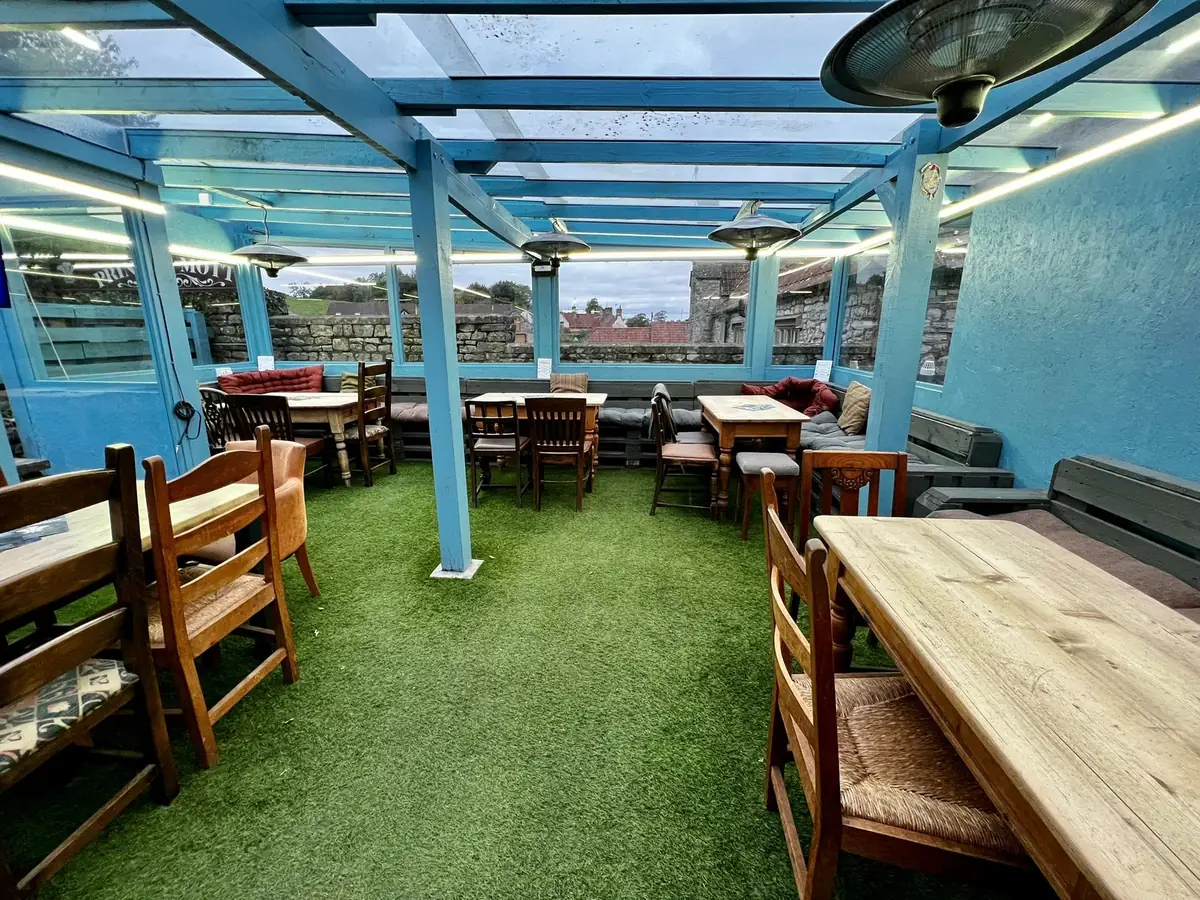
Picture the Friday rush
It's 9pm. The queue's three deep and one table wants the bill split three ways.
Two tabs are open. A card machine's spinning. Someone's waving a tenner. Your one bar staff member is trying to find the pricing for a guest ale that went on this afternoon. This is the test. Not the sales demo, not the glossy brochure. This.
Every EPOS system on the market looks brilliant in a quiet showroom. The only question worth asking is how it behaves when you're slammed. Vendors don't tell you that, because they're selling their own box. I'll tell you, because I'm not.
Thing 1
Speed at the bar.
Three taps to ring a round, not seven. Big, sensible buttons. A layout your weekend staff learn in one shift, not one month. Every extra second at the till is a longer queue and a colder welcome.
The point: if a system can't keep up with a busy bar, nothing else about it matters.
Thing 2
Tabs and table service.
Open a tab in two seconds, move it to a different table, split it three ways without a maths degree. If you do food, your floor staff need to fire orders to the kitchen from where they're standing.
Red flag: clunky tab handling is where money quietly walks out the door.
Thing 3 · The big one
Till and card machine as one.
This is the big one. The total should land on the card machine automatically, no keying it in by hand at 9pm. One system, one support line.
Red flag: when the till and the card reader come from two different companies, every problem becomes a finger-pointing match and you're stuck in the middle.
Thing 4
Connectivity that holds.
Nine times out of ten, when pub tech "fails", it's the broadband, not the till. A cloud system is only as good as the line it sits on. Old buildings, thick walls, rural lines that drop at teatime.
Sort the connectivity and a surprising number of "the system's broken" calls just disappear.
Thing 5
Support that answers the phone.
At 8pm on a Saturday, you don't want a ticketing portal and a 48-hour response time. You want a human who picks up, knows your setup, and gets you taking payments again.
Ask before you sign: who answers the phone on a Saturday night, and how fast? The answer tells you almost everything.
The cost reality
Right now, the wrong system isn't just annoying. It's margin you can't spare.
UK hospitality is staring down £3.4 billion in annual cost increases from April 2025, made up of £1.9bn in wages, £1bn in employer National Insurance, and £500m in business rates. That adds roughly £2,500 to the cost of employing one full-time person (UKHospitality).
And the card fees bite too. About 35% of UK small businesses say high card-transaction fees are the main thing holding back how they take payments (NPI). Most pay somewhere between 1.5% and 3.5% per transaction (SumUp, December 2025). On a pub turning over real money, half a percent in the wrong direction is a serious sum over a year.
With 45,000 pubs left in the UK and the number still falling (Statista), nobody can afford to leave money on the table because the till and the card machine were never set up to work together.
A worked example
What does half a percent really cost a pub?
Here's the kind of sum I run with publicans. Take a site doing a decent card turnover. Shave half a percentage point off the card rate and add a system that doesn't drop out mid-service, and the saving over a year is real money, not loose change.
[ANDY TO CONFIRM: a real worked example, e.g. "a pub doing £X a year on card was on Y% and I got them onto Z%, saving roughly £3,200 a year". Use real numbers from a real review so this lands as lived experience, not a vendor estimate.]
No affiliate roundup is going to do that maths for you, because they're paid to send you to a brand. I'm not. That's the difference, and it's the whole reason this works.
Talk it through with Andy
How to actually choose
"Which one should I buy?" It depends. And that's the real answer.
A wet-led local with one till has different needs from a food-led gastropub with table service across two floors. Anyone who names a single "best" system before they've seen your bar is selling something. So before you sign anything, work through this.
Answer those six honestly and the field narrows fast. If you want a hand running through it, that's exactly the kind of thing I look at on a free systems review, and you can see the kit I'd actually recommend rather than the kit someone's paid to push.
Six questions before you sign
- How fast can my weekend staff ring a round on it? Make them try it, not the salesperson.
- Does the card machine talk to the till, or am I keying totals in by hand?
- Is it one company and one support line, or two firms blaming each other?
- What happens when the broadband drops? Does it keep trading offline?
- Who answers the phone at 8pm on a Saturday, and how fast?
- What is the all-in annual cost: software, hardware, rental, and card fees added up?
I spent 40 years in hospitality, a lot of it with Punch Taverns and Whitbread, across thousands of pubs. I've stood behind the bar on the busy nights. I know which problems are real and which are sales-deck filler.
It's also why I started the Behind the Bar podcast, sitting down with publicans about what running a pub is actually like in 2026. The tech advice on this site comes from the same place: real bars, real nights, no box to sell.
Common questions
EPOS for pubs: the questions I get asked most.
An EPOS (Electronic Point Of Sale) system for a pub is the till software and hardware that takes orders, splits bills, runs tabs, takes payment, and tracks stock and sales. In a pub it has to cope with bar service, table service, and a queue building fast, all at once.
There isn't one best system for every pub. The right one depends on your service style, your site, your broadband, and what you already run. The answer is to work out what actually matters behind your bar first, then match a system to that. I sell nobody's box, so I can help you do exactly that.
Card fees and software fees are two different costs, and the headline rate is rarely the real number. Most small UK businesses pay roughly 1.5% to 3.5% per card transaction (SumUp, December 2025). The lowest advertised rate often hides monthly software charges, hardware rental, or a long tie-in, so always look at the total annual cost, not the percentage on the poster.
It varies a lot. You're typically looking at hardware (a till, a card machine, maybe a kitchen printer), monthly software per till, and the card-processing percentage on top. Some setups are pay-as-you-go with cheap hardware; others want a few thousand up front. The number that matters is the all-in annual figure once fees, software, and rental are added together.
Not much, really. POS means Point Of Sale and EPOS means Electronic Point Of Sale. In the UK trade we tend to say EPOS; the US tends to say POS. They describe the same thing: the system you take orders and payments on.
An EPOS system can cost anything from very little up front (cheap hardware, monthly software, pay-as-you-go card fees) to several thousand pounds for a full multi-till install. The trap is judging it on the sticker price. A cheap till that drops out on a Saturday night, or a card rate half a percent too high, costs you far more over a year than it saved you on day one.
There's no single best. UK pubs run on very different setups depending on whether they're wet-led, food-led, single-site, or part of a group. What matters more than the brand is whether the till, the card machine, and the broadband all work together, and whether someone picks up the phone when they don't.
For a busy bar, the things that decide it are speed at the point of sale, clean tab and table handling, and a card machine that talks to the till so nobody's keying totals in by hand. The brand on the screen matters far less than how it behaves at 9pm on a Friday.
Not sure your till's pulling its weight?
If you're a publican wrestling with a slow till, a card machine that won't behave, or fees you don't understand, I'll go through your setup and tell you straight what I'd change.
A conversation costs nothing, and I'm selling nobody's box.